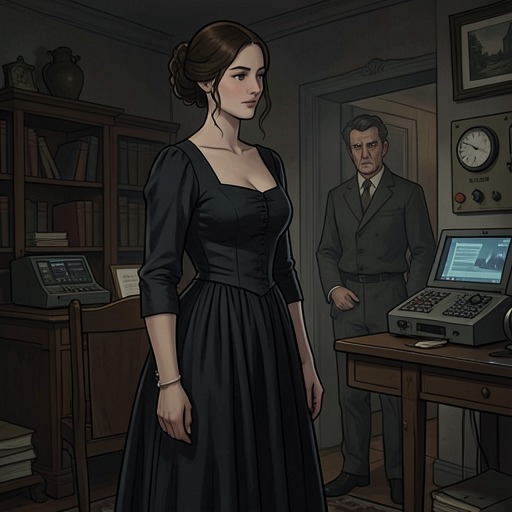
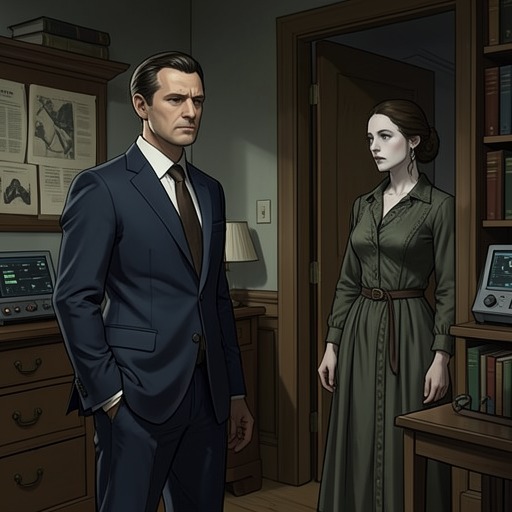
Rachel and Scott’s false friendship and confrontation
The Girl on the TrainRachel Watson and Scott Hipwell’s false friendship begins as Rachel’s attempt to enter the investigation into Megan Hipwell’s disappearance and ends in confrontation when Scott learns she never knew Megan. Rachel tells herself that she is trying to help him by sharing a lead about Megan and Kamal Abdic, but the invented intimacy on which she builds that help makes trust impossible. When Scott’s suspicions turn toward her, the relationship’s central tension comes into view: she has concealed the truth to gain access to him, while he interprets that concealment as evidence that she has been working against him.
A Friendship Built on Concealment
Rachel presents herself to Scott as a friend of Megan’s from the gallery, although she has never met Megan. She also tells Scott that she saw Megan with Kamal Abdic. Rachel believes he would not take the observation seriously if it came from an unknown woman she had seen from the train, so she makes the false claim of friendship to give her account weight. Her asserted purpose is to help Scott know that Megan may have had another lover and to direct attention away from the assumption that a husband must be responsible for his wife’s disappearance.
The lie is part of a broader pattern of hiding difficult facts about herself. Rachel left her job at Huntingdon Whiteley months earlier but did not tell Cathy, her landlady, because she feared Cathy would worry about the rent. She continued to conceal her unemployment, and Cathy eventually confronted her after Damien encountered a former colleague who knew Rachel had left the firm. Cathy’s discovery makes clear that Rachel’s fabrications are not confined to Scott, even though the lie about Megan serves a more deliberate investigative purpose.
Rachel’s own account of how she came to deceive Scott is tied to drinking and shame. After sending him a message, she recognizes that a clear-headed decision to leave the case alone has given way to the impulsive desire to remain part of it. She describes her drunken self as acting without regard for consequences and admits that she lied in order to persuade Scott to talk to her. This self-awareness does not undo the deception; it shows how her wish to matter in the story and her impaired judgment reinforce each other.
The Attempt at Cooperation
By August 15, Rachel has an upcoming job interview arranged through Cathy. The position is a poorly paid assistant role at a small public-relations firm in Witney, and Cathy has helped explain Rachel’s absence from work as a recovery from a breakdown. While Rachel is meant to be preparing for the interview, Scott calls because he wants to talk. Rachel initially treats their previous encounter as a mistake and suggests there is no need for further discussion, but Scott insists that he wants one. The call briefly makes a continuing connection seem possible, though neither has yet faced the full extent of what separates them.
At their meeting, Scott tells Rachel that the DNA results exclude both him and Kamal as the father of Megan’s pregnancy. He concludes that Megan had another man and presses Rachel to say whether she knew about him. Rachel’s silence and reaction strengthen Scott’s suspicion that she has withheld something. The new result changes the meaning of her earlier intervention: the lead about Kamal no longer accounts for the pregnancy, and Scott now suspects that Rachel may know more about Megan’s other relationships than she has admitted.
Rachel explains that she approached Scott because she wanted him to know about Kamal and feared he would dismiss her if she presented herself merely as a woman from the train. She says her purpose was to help him and to ensure that he knew of another possible suspect. The explanation reveals a genuine stated intention beneath the lie, but it does not restore the identity she claimed. For Scott, the crucial fact is that the apparent friendship was fabricated; for Rachel, the fabrication had been a means of making her warning audible.
Exposure and Breakdown of Trust
Scott tells Rachel that Riley had asked whether they were in a relationship. He says Anna Watson had complained about Rachel’s presence around him. In explaining the situation to Riley, Scott had described Rachel as an old friend of Megan’s who was helping him. Riley’s response exposed the weakness of that account: Rachel did not know Megan and had invented the connection. Scott recounts this discovery as proof that he has been surrounded by lies, and his view of Rachel changes from that of an ally to that of a person who may have manipulated him.
The confrontation intensifies when Scott finds a reminder on Rachel’s phone for an appointment with Dr Kamal Abdic. The appointment leads him to question what Rachel has been saying to Kamal and whether she has been giving him information about Scott or Megan. Rachel says she was trying to find out more and to help, but Scott suspects that she has been working against him and encouraging the police to pursue him. The appointment is concrete evidence that she has been in contact with Kamal; by itself, it does not establish the accusations Scott makes about what she told him.
Rachel reports that Scott held her in his home and threatened her. She later tells Riley that the episode lasted perhaps half an hour. Afterward, she goes to the house at 23 Blenheim Road and leaves Tom Watson a note asking to talk, without naming Scott because she fears Tom might confront him. She then contacts the police, hoping to speak to Detective Inspector Gaskill but speaking instead to Riley. Her decision to report Scott marks a sharp break from the role of helpful confidante she had tried to occupy.
Competing Accounts and Significance
Riley challenges Rachel’s decision to visit Scott, emphasizing that Rachel had been warned to stay out of the investigation and had misrepresented herself as Megan’s friend. Riley also points out that Scott is under severe strain and may be dangerous, while warning that Rachel’s conduct could jeopardize the murder inquiry. Rachel answers that Scott is dangerous and insists that he killed Megan. She cites a photograph of Scott and Megan that had been smashed, but Riley says the police have already seen it and searched the house; the photograph is not sufficient evidence of murder.
The exchange leaves Rachel’s suspicions and the police’s evidentiary position at odds. Rachel is convinced that Scott is responsible, while Riley refuses to treat Rachel’s conclusions or the damaged photograph as proof. The conflict also exposes the cost of Rachel’s chosen method: by manufacturing a past with Megan, she gives Scott reason to doubt even the information she believes is important. Her wish to help and her need to gain access coexist with deception, so the relationship cannot settle into genuine alliance. Its defining movement is from claimed friendship to exposure, fear, and mutual distrust.